Sony Just Locked Your Games. They're Calling It a Feature.
Sony confirmed PS5's 30-day online check-in is intentional design. Your digital library locks if you go offline. Here's why the Protect Our Games Act matters.
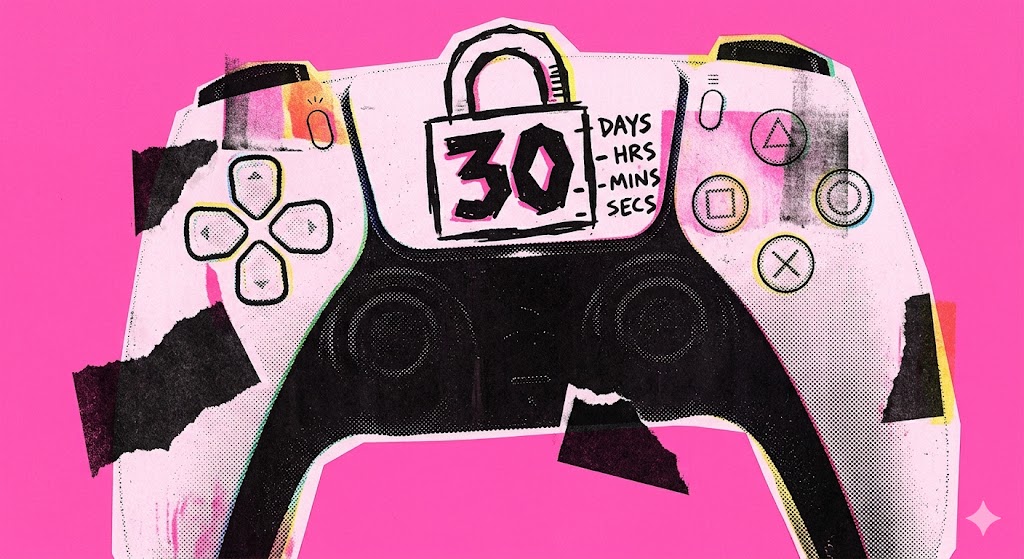
A PS5 console with a locked padlock overlay — representing Sony's digital library lockout for offline users
Sony just told millions of PS5 owners something the industry has carefully avoided saying out loud: you don't own your digital games. The 30-day online check-in requirement for all digital PS5 software — confirmed by PlayStation Support as "intentional design, not a bug" — is the most honest statement a console maker has made about digital ownership in years.
What the 30-Day Rule Actually Means
Starting with a rolling rollout in April 2026, any PS5 that goes offline for more than 30 days will have its entire digital library locked until the console reconnects and verifies licenses with Sony's servers. Not a single game. Your whole library.
To be clear about what this isn't: it's not an anti-piracy measure (pirates cracked digital verification years ago). It's not a security feature. It's a reminder that every digital game you've purchased is, legally speaking, a license that Sony can revoke — or simply let expire — whenever they choose.
PlayStation Support's response when customers flagged this as a bug was telling: "This is functioning as intended." Companies deploy that phrase when they want you to drop the subject.
The Offline Problem Is Bigger Than You Think
There's a tendency to dismiss offline concerns as niche — the province of people in rural areas or on naval vessels. That's the wrong frame.
I've lived both sides of this in the past year. Last month I was away on a three-week holiday — 21 days offline, nine days shy of Sony's limit. The only reason my library survived untouched is arithmetic. Not because I had any protection, not because I did anything right. Just luck of the calendar. And last October, mid house-move, my PS5 went into a storage unit for three months while I sorted out the new place. Under the system Sony has now formalised, I would have come home, plugged in, and found everything locked. Every title I've paid for over several years — inaccessible until I begged a server in California to confirm I'm allowed to play them.
My Steam Deck sat in the same storage unit the entire time. It runs Linux. No check-in. No server handshake. Every game I'd downloaded on it was exactly where I left it when I came back. Same person, same games, same circumstances — entirely different outcome, because Valve never decided to make their business model my problem.
These aren't edge cases. A holiday and a house move. Two of the most ordinary things people do.
As someone working in enterprise tech, I've watched software licensing battles play out for over a decade. The playbook never changes — lock the user in, then make access contingent on connection to the vendor's infrastructure. The difference in gaming is that customers paid full retail price ($70 to $80 per title) under the reasonable expectation that they were buying something permanent.
The real story isn't the 30-day limit. The real story is that there's no limit on Sony's end to what comes next.
California Is Watching
The timing here is not coincidental. California's Protect Our Games Act — now backed by Stop Killing Games — would require 60-day end-of-life notice for any digital game and mandate offline functionality guarantees. It's a direct legislative response to exactly this kind of corporate architecture.
Stop Killing Games has already proven it can move the needle. The EU petition surpassed one million signatures. Ubisoft reversed its The Crew shutdown decision under regulatory pressure earlier this year. Sustained pressure, combined with credible legislative threat, changes behaviour.
Sony's check-in requirement arrives at the worst possible political moment for the industry's argument that digital ownership concerns are overblown. Every time a company confirms "yes, your library can be locked, and no, that's not a bug," the case for legislation writes itself.
The Stakes Have Changed
Here's what I find most interesting: Sony didn't have to confirm this. They could have issued a vague statement about "improving account security" and let the story fade. Instead, PlayStation Support explicitly confirmed the check-in requirement is intentional design. That's either extraordinary confidence or a serious miscalculation about how this reads in a climate where digital rights legislation is actively advancing.
The bottom line: the Protect Our Games Act isn't overreach. It's the minimum viable protection for consumers who've been told for fifteen years that digital is the future — and are now finding out exactly what kind of future that is.
The music industry figured this out eventually. Books did too. Gaming will, one way or another. The question is whether it happens through legislation, or whether Sony keeps pushing until a library of thousands of purchased games disappears and the regulatory response becomes something much harsher.
Thirty days. That's how long you have before Sony reminds you who actually owns your games.