WTF Just Happened? Micron, Crucial, and the End of Affordable Memory
When one of the world's three memory manufacturers exits the consumer market to chase AI profits, PC builders pay the price—literally
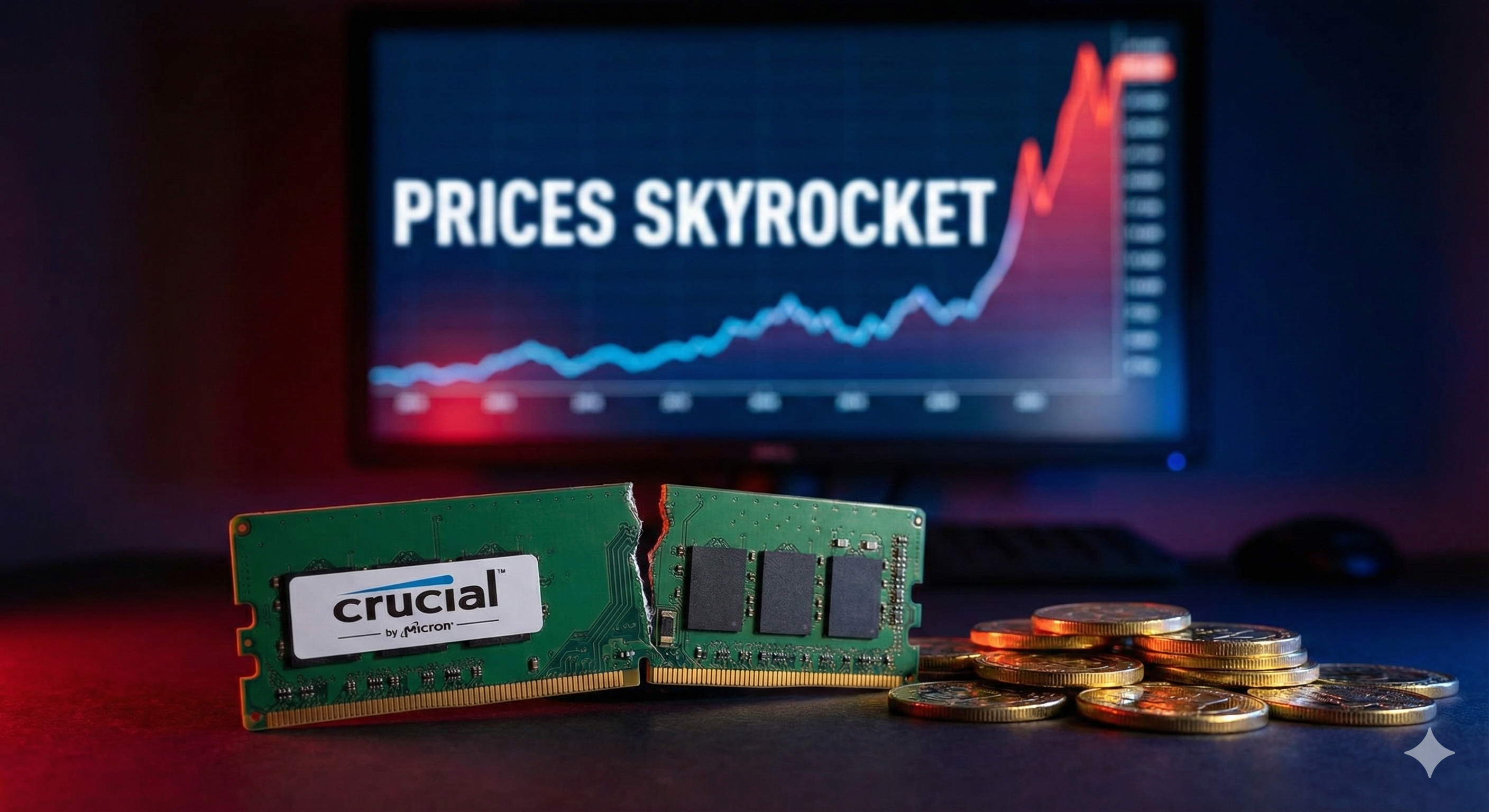
Memory prices skyrocket as Micron exits the consumer market - Image: Gamers Nexus
If you've been looking to upgrade your PC's RAM or grab a new SSD, you might have noticed something alarming: prices are skyrocketing. A recent video by Gamers Nexus sheds light on a major industry shift that explains why this is happening—and why it might get worse. The headline news? Micron is exiting the consumer memory business.
Here's a breakdown of what's happening, why it matters, and what it means for the future of PC building.
The Death of a Giant: Goodbye, Crucial?
Micron, one of the three major global suppliers of memory (alongside Samsung and SK Hynix), has announced its decision to "exit the Crucial consumer business."
Crucial was Micron's "house brand"—a way for the manufacturer to sell directly to consumers. According to Gamers Nexus, this brand played a vital role in the market by providing first-party pricing suppression. In other words, because Crucial sold memory directly from the factory to you, it helped keep prices competitive against third-party brands (like Corsair or G.Skill) that have to buy chips from Micron first.
With Crucial's consumer arm shutting down, that competitive pressure is gone.
The "AI" Excuse
Why is Micron doing this? The official reason is to "improve supply and support for our larger strategic customers in faster-growing segments."
Translated into plain English: AI and Data Centers.
Gamers Nexus argues that Micron is pivoting entirely to serve the massive demand from corporate giants building AI infrastructure. The video suggests that the consumer market—people building gaming PCs, workstations, or just upgrading their laptops—is no longer a priority compared to the deep pockets of enterprise customers.
The Timing Couldn't Be More Telling
As AI hype reaches fever pitch and data centers expand globally, memory manufacturers are abandoning the consumers who built their brands. The message is clear: if you're not a mega-corporation buying in bulk, you don't matter anymore.
The Immediate Impact: Skyrocketing Prices
The video highlights startling data on how this shift is already hurting wallets. In just the last few months, memory prices have exploded:
- DDR5 RAM Kits: Some kits have seen price increases of over 200% in just 120 days
- SSD Prices: Popular drives like the Crucial T705 and T500 have jumped significantly in price almost immediately following the announcement
- Budget Tier: Even lower-end, budget-friendly memory kits are seeing massive markups, punishing entry-level builders the hardest
For perspective, a DDR5 kit that cost $150 three months ago might now run you $450 or more. Budget builders who saved up to build their first gaming PC? They're priced out entirely.
The Bigger Picture: You Pay Twice
One of the most stinging criticisms in the video is the relationship between these corporations and the taxpayer. Gamers Nexus points out that Micron (and others) have received billions of dollars in government subsidies via the CHIPS Act and other tax breaks—money that comes from American taxpayers.
The irony is bitter: consumers funded the expansion of these factories through taxes, only for the companies to turn around, abandon the consumer market, and sell their products exclusively to mega-corporations.
Let's put this in perspective. You paid taxes to subsidize Micron's factory expansion. Now Micron is using that factory capacity to serve AI companies exclusively, while charging you triple the price for consumer memory—if you can even get it. If that's not a perfect metaphor for modern capitalism, I don't know what is.
The Future: Rent, Don't Own?
The video proposes a grim theory for the "endgame" of this industry shift. As hardware becomes unaffordable for the average person, the industry pushes consumers toward Software as a Service (SaaS) and cloud computing.
Instead of owning 128GB of RAM to run a complex task at home, you might be forced to "rent" that computing power from a data center—using the very same hardware you can no longer afford to buy.
Think about it: Why let consumers own hardware when you can rent it to them monthly? It's the subscription model applied to computing infrastructure, and it's already happening with cloud gaming, remote rendering, and AI inference services.
What This Means for You
If you're planning a PC build or upgrade, buy your memory NOW before prices climb even higher. The window for affordable consumer hardware is closing fast. Future PC builders may look back at 2024 as the last year when building your own computer was financially accessible.
The Bottom Line
The exit of Micron's Crucial brand from the consumer space marks the end of an era for affordable home computing. With fewer competitors and a clear priority on enterprise AI, the days of cheap, accessible high-end memory may be behind us.
What makes this story fascinating isn't just the price increases—it's what it reveals about the tech industry's priorities. Consumers are no longer the target market. We're an afterthought, a margin too small to matter when data centers are buying memory by the ton.
For anyone who values owning their own hardware, running local applications, or building PCs without taking out a second mortgage, this is a wake-up call. The future the tech industry is building isn't one where you own your tools—it's one where you rent them, monthly, forever.